Paris Hidden Gems: 11 Secret Spots Only Locals Know
Plan your trip to Paris
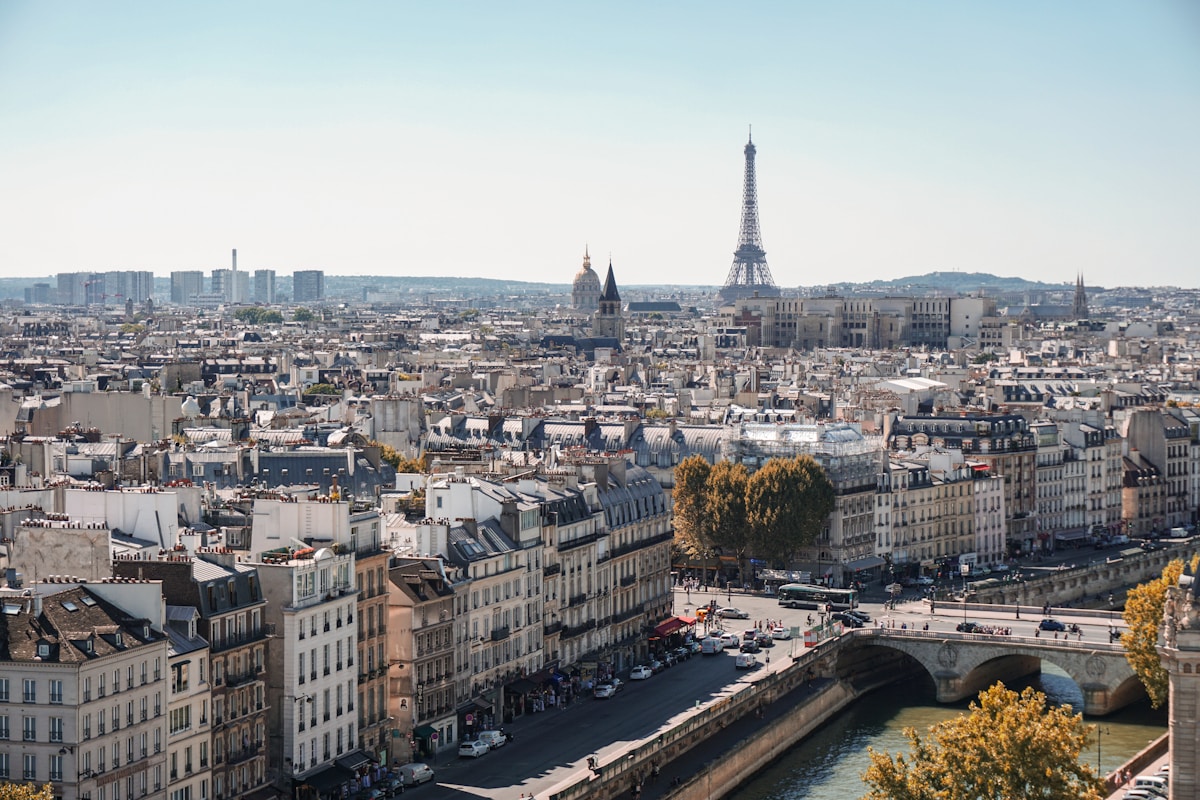
Paris Has Layers Most Tourists Never See

Paris has been Paris for centuries — and that means it's had plenty of time to develop layers. Behind every grand boulevard is a hidden courtyard. Behind every famous museum is a lesser gallery nobody queues for. Beneath the city's picture-perfect surface is a parallel Paris that locals guard jealously.
This guide collects 11 of those places. Some are hidden in plain sight — covered passages you've walked past, gardens whose gates you've never noticed, streets in the middle of the city that feel like countryside. Others require a bit of effort: a walk to the far edge of a metro line, a buzzer you need to press, a door in a courtyard that leads to a completely different world.
None of them charge an entry fee that would make you blink. Most are completely free. All of them will make you feel like you've discovered something no guidebook told you about.
The Covered Passages: Paris's 19th-Century Shopping Malls

Before department stores, Paris had passages couverts — covered shopping arcades built between buildings, lit by glass roofs, and filled with everything from bookshops to umbrella makers. Most were built in the early 1800s, and about a dozen survive today.
The two most beautiful are Galerie Vivienne (2nd arrondissement, enter at 4 rue des Petits Champs) and Passage des Panoramas (2nd, enter at 11 boulevard Montmartre). Galerie Vivienne is the stunner: mosaic floors, neoclassical frescoes, skylight flooding the entire arcade in soft white light. It houses a legendary wine bar (Le Grand Colbert, if you want film-set energy), a rare bookshop, and a designer boutique that sells silk scarves hand-painted in the upstairs atelier.
Passage des Panoramas is the oldest surviving passage in Paris (opened 1799), and the grungier, more authentic cousin — stamp collectors, vintage postcards, a phenomenal oyster bar (Le Garde Champêtre), and some of the city's best natural wine bars.
**Pro tip:** Visit between 10 AM and noon on a weekday. The passages are nearly empty, the light is perfect, and the shopkeepers are happy to chat. Avoid weekends when passage-hopping has become a TikTok trend.
**Getting there:** Metro Bourse (lines 3) or Grands Boulevards (lines 8, 9). Passages cluster in the 2nd arrondissement — you can visit four or five in an hour.
La Campagne à Paris: A Village in the 20th Arrondissement

In the far northeast corner of Paris, off the tourist radar entirely, is a neighborhood that looks nothing like the city around it. La Campagne à Paris translates to 'The Countryside in Paris,' and it earns the name: narrow cobblestone lanes lined with tiny brick cottages, each with its own front garden, climbing roses, and a silence so deep you'd never guess you're inside the Paris ring road.
This was originally built as affordable housing for workers in the 1920s — a garden city concept that kept 200 families in two-story houses with yards, an absurd luxury inside a dense European capital. A century later, it's one of the most coveted addresses in Paris, and nobody who lives there would ever leave.
The best street is Rue de la Campagne à Paris itself. Walk down it slowly. Every house is slightly different: some with painted shutters, some with wisteria crawling up the facade, some with tiny statues in the garden. It feels like a Cotswolds village teleported into the 20th.
**Pro tip:** Combine this with a visit to the nearby Belleville neighborhood — a multicultural district with some of the best cheap eats in Paris and a hillside park with a killer view of the Eiffel Tower.
**Getting there:** Metro Jourdain (line 11), then walk east on Rue de la Campagne à Paris. Alternatively, Metro Pyrénées (line 11) and cross the park.
Arènes de Lutèce: A Roman Amphitheater Hidden in a Residential Square

In the 5th arrondissement, behind an unmarked entrance on a quiet residential street, is a 1st-century Roman amphitheater that once held 17,000 spectators. It was buried for centuries and only rediscovered in the 1860s when the city was building a tram line. Today it's a public park where locals come to read, play pétanque, and sip wine on the stone steps where gladiators once fought.
It's not the Colosseum. It's better: no ticket booth, no security line, no selfie sticks. Just a semicircle of grass surrounded by ancient stone terraces, a few towering trees, and the hum of the neighborhood going about its day.
Bring a picnic. Sit on the upper terraces. Watch the pétanque players under the chestnut trees. The arena floor is now a soccer pitch and playground, but the energy of a space that's been a gathering place for 2,000 years is unmistakable.
**Pro tip:** Visit in late afternoon when the light hits the western terraces. The Rue Monge entrance is the most dramatic — you walk through a narrow passage and suddenly the amphitheater opens up in front of you.
**Getting there:** Metro Place Monge (line 7). The entrance is at 49 rue Monge or 4 rue de Navarre.
Square du Vert-Galant: The Best Free View in Paris

At the western tip of Île de la Cité, tucked beneath the Pont Neuf bridge, is a triangular park that most tourists never even notice. They walk across the bridge, snap a photo of the Seine, and keep moving. The real magic is 10 meters below them.
Square du Vert-Galant is a small park that juts into the Seine at the exact point where the river splits around the island. The view from its benches is a perfect postcard: the Louvre on one side, the Right Bank on the other, the Pont Neuf arching overhead, and nothing but sky and water straight ahead.
On warm evenings, this is where Parisians come to drink wine at sunset. The steps down to the water are always occupied by couples, friends, solo travelers with books — everyone drawn by the same gravitational pull toward the river and the light.
There's nothing to do here but sit. That's the point.
**Pro tip:** Buy a bottle of wine and some cheese from the Monoprix on Rue de Rivoli (10 min walk), then head down to the square for sunset. You'll be sharing the space with locals who've been doing this for decades.
**Getting there:** Metro Pont Neuf (line 7). Walk to the western tip of Île de la Cité and take the stairs down from the Pont Neuf.
Musée de la Chasse et de la Nature: The Strangest Museum in Paris

Hidden inside a 17th-century hôtel particulier in the Marais is a museum dedicated to hunting and nature — and it is absolutely nothing like what you'd expect. This is not a taxidermy warehouse. The Musée de la Chasse et de la Nature is a surreal, imaginative, occasionally unsettling collection that treats hunting as a cultural phenomenon rather than a sport.
The rooms are staged like a wealthy hunter's private home: antler chandeliers, paintings of dogs and stags, display cases of antique rifles that look like works of art. But interspersed with the traditional exhibits are contemporary art installations — a room filled with porcelain animal heads, a video of a fox wandering through a supermarket, a sculpture of Diana the Huntress made from neon tubes.
The building itself is worth the trip: paneled libraries, winding staircases, a courtyard garden where peacocks roam freely.
**Pro tip:** Go on a weekday afternoon when it's nearly empty. The audio guide (€5) is worth it — the stories behind the exhibits are half the experience. Allow 90 minutes.
**Cost:** €10 full price, free for under-26s and on the first Sunday of the month.
**Getting there:** Metro Rambuteau (line 11) or Hôtel de Ville (lines 1, 11). 62 rue des Archives, 3rd arrondissement.
Rue Crémieux: The Most Photographed Street You've Never Heard Of

Just south of the Gare de Lyon, a single narrow street looks like it was transplanted from Notting Hill or a Wes Anderson film set. Rue Crémieux is a pedestrian-only lane lined with pastel-colored houses — pale pink, mint green, butter yellow, lavender blue — each with a tiny front garden, a painted door, and a personality entirely its own.
The street was built in the 1850s as affordable housing for railway workers. Today it's one of the most photographed corners of Paris, yet most tourists never find it because it's a dead end off an unremarkable boulevard. The residents have learned to live with the photographers, but please be respectful: this is still people's homes.
**Pro tip:** Come at 8 AM for the empty-street shot with perfect soft light. The best colors are on the south side of the street. Don't linger too long or make noise — residents have campaigned against tour buses for good reason.
**Getting there:** Metro Gare de Lyon (lines 1, 14, RER A/D). Walk 5 minutes southeast to Rue Crémieux.
Le Chalet du Lac: Lunch in the Middle of a Forest

In the vast Bois de Vincennes on Paris's eastern edge — larger than Central Park — sits a lake with a Swiss-style chalet restaurant that feels like a movie set. Le Chalet du Lac serves straightforward French food (steak frites, duck breast, tarte Tatin) on a terrace that extends over the water, surrounded by trees, swans, and the occasional rowboat drifting past.
It's not trendy. It's not hidden in the sense of being a secret — the Bois de Vincennes is a popular weekend destination for Parisian families. But almost no tourist goes here. The crowd is 95% locals: joggers stopping for lunch, families celebrating birthdays, couples on afternoon dates who want to feel like they've escaped the city without leaving the city.
After lunch, rent a rowboat (€15/hour) and spend an hour on the lake. It's one of the most peaceful things you can do in Paris.
**Pro tip:** Book a table on the terrace in advance for weekend lunches. Weekdays you can walk in. The menu du midi (weekday lunch special) is around €25 for three courses — excellent value for the setting.
**Getting there:** Metro Château de Vincennes (line 1), then 15-minute walk through the park. Alternatively, bus 46 to the Lac Daumesnil stop.
Le Comptoir Général: A Canal-Side Wunderkammer

There's no single word for what Le Comptoir Général is, which is exactly why it works. Part bar, part museum, part event space, part vintage furniture showroom — it's a sprawling canal-side warehouse in the 10th arrondissement that defies easy description.
Inside, it looks like an eccentric explorer's home: taxidermy under glass bells, African masks on the walls, mismatched velvet armchairs, a greenhouse conservatory, a library of art books you can actually borrow. The bar serves rum punches, natural wines, and solid cocktails. The food is Caribbean-French fusion (the accras de morue are outstanding). The crowd is a mix of artists, freelancers, and locals who've been coming here for years.
There's a hidden garden out back. There are often live DJ sets on weekends. There's a general atmosphere that says: stay as long as you want.
**Pro tip:** Go on a weekday afternoon when it's quiet. The garden terrace is one of the best secret outdoor spots in the 10th. Avoid Saturday nights unless you're ready for a crowd.
**Getting there:** Metro Jacques Bonsergent (line 5) or Gare de l'Est (lines 4, 5, 7). 80 quai de Jemmapes, 10th arrondissement.
Marché aux Puces de Saint-Ouen: The World's Largest Flea Market

The Saint-Ouen flea market is not exactly a secret — it's been famous for over a century. But most tourists hit the main drag, pay souvenir prices, and leave overwhelmed and underwhelmed. The real magic of the Puces is in the sub-markets, the alleys behind the alleys, and the stalls that require you to actually dig.
Skip Marché Paul Bert (overpriced and picked-over) and head to Marché Dauphine or Marché Biron for antiques. Marché Vernaison is the one for actual bargains — vintage postcards, old vinyl, brass ashtrays, furniture that needs a little love. The dealers here are mostly old-timers who've been coming for decades and are happy to talk if you speak even broken French.
A few specific things to hunt for: vintage Paris metro signs (€15–€40), old restaurant china (€5–€15 per plate), coral-patterned linen (a Puces specialty), and mid-century French pottery.
**Pro tip:** Go on Sunday morning before 11 AM and skip Saturday entirely (peak pricing). Bring cash — many smaller stalls don't take cards. And wear comfortable shoes: the entire market complex spans nearly 50,000 square meters across 15 separate markets.
**Getting there:** Metro Porte de Clignancourt (line 4), then a 10-minute walk or free shuttle. Open Saturday–Monday, 10 AM–6 PM.
Coulée Verte René-Dumont: The Original High Line

New York's High Line gets all the credit, but Paris had one first. The Coulée Verte René-Dumont — also known as the Promenade Plantée — was the world's first elevated park built on a former railway line, opening in 1993, a full 16 years before Manhattan's.
It runs 4.5 kilometers from the Opéra Bastille to the Bois de Vincennes, mostly on a brick viaduct that once carried trains to the now-vanished Gare de la Bastille. The lower arches of the viaduct (on Avenue Daumesnil) have been converted into artisan workshops — the Viaduc des Arts, home to furniture makers, weavers, and cabinet restorers whose workshops you can watch through the open doors.
Walking the Coulée Verte is an extraordinary experience. You're suspended above the traffic, moving through tunnels of foliage, past apartment windows, over crossroads, through a tunnel that opens into a bamboo forest. It's a secret green corridor through one of the densest parts of Paris.
**Pro tip:** Walk it from the Bastille end toward the Bois de Vincennes — the downhill direction and you end at a park. The best section is the first kilometer, before the path descends to street level. The Viaduc des Arts workshops are open Tuesday to Sunday.
**Getting there:** Metro Bastille (lines 1, 5, 8). The entrance is at the corner of Rue de Lyon and Rue Creuzet, up the stairs next to the Opéra Bastille.
Practical Tips for Finding Paris's Hidden Gems
A few principles that apply to all of these places:
**Press the buzzer:** Many of Paris's best hidden spots — courtyards, gardens, private passages — are behind locked gates that say 'Propriété Privée.' Parisians know that 'Private Property' in Paris often means 'please close the gate behind you.' If a courtyard looks interesting and the gate is unlocked, step inside respectfully.
**Look up:** The ground floors of Paris are tourist shops and chain cafés. The first and second floors are often extraordinary — Art Nouveau facades, ironwork balconies, mansard roofs. The best views of the city's secrets are often above eye level.
**Get lost in the 11th:** The 11th arrondissement has the least to offer in terms of landmarks, which is exactly why it's the best place to wander. No monuments, no queues, just neighborhoods where people actually live. The hidden gems here are the ones you discover by accident.
**Go early, go late:** The best secret Paris experiences happen at 8 AM (when the passages are empty and the light is soft) or 10 PM (when the crowds have dispersed and the city becomes quiet). Midday is for tube tickets, not discoveries.
**Carry a metro map:** The best hidden gems are often one or two stops past where tourists usually get off. Extending your metro journey by five minutes can take you from tourist Paris to real Paris.
Conclusion: The Paris You Find Off the Map

Paris rewards the curious traveler. The city's most memorable experiences rarely involve standing in line for a ticket. They involve a courtyard gate left slightly ajar, a street that looks residential until you notice the Roman ruins in the park, a bar that's hidden behind a bookshop and reveals itself only to those who press the buzzer.
The eleven places in this guide represent a different Paris — not the one on postcards, but the one that exists in the spaces between monuments. It's no less beautiful. In fact, for many visitors, it's the version of Paris that stays with them longest.
**Ready to explore Paris beyond the guidebooks?** Pin this guide, pack comfortable shoes, and leave the map at the hotel. The best discoveries are the ones you make by following your curiosity.