The Perfect 3-Day Paris Itinerary: A Local's Blueprint for First-Timers
Plan your trip to Paris
How to Use This Itinerary (Read This First)

This isn't a checklist to race through. It's a route designed by people who live here — one that respects Paris's rhythm, avoids the worst crowds, and builds your understanding of the city day by day.
**The philosophy:** Day 1 hits the icons so you can stop worrying about them. Day 2 goes deeper into the city's character. Day 3 gives you space to breathe, explore, and leave wanting more.
**Practical notes:**
- All walking routes are sequential — no backtracking
- Metro stops are included for every major move
- Reservations are noted where essential
- Costs are per person and current as of 2026
- Assume a 9 AM start; Paris rewards early risers
**Buy a Navigo Easy card** (€2) and load 10 t+ tickets (€17.35) — covers Metro, bus, and RER within the city. Walk whenever possible; Paris is built for it.
Day 1: The Icons — Do Them Right

**Morning: Île de la Cité & Notre-Dame
Start at Cité metro (line 4). Walk across the Pont Neuf — the city's oldest bridge — for views of both banks. Notre-Dame's interior has reopened after the 2019 fire, and the restoration work is extraordinary. Entry is free; the towers (€10) and crypt (€9) are worth it if the line is short.
Walk 5 minutes to Sainte-Chapelle (€13) — arrive at opening (9 AM) for the best light through the stained glass. This 13th-century chapel is arguably more impressive than Notre-Dame's interior.
**Lunch:** L'As du Fallafel on Rue des Rosiers in the Marais (€8–€12). It's famous for a reason. Eat it walking or grab a bench in the nearby Place des Vosges, Paris's oldest planned square.
**Afternoon: The Louvre (or the Alternative)
The Louvre is overwhelming if you try to see everything. Don't. Pick one wing and commit.
**The 90-minute route:** Enter through the Porte des Lions (less crowded than the Pyramid) → Winged Victory → Mona Lisa (yes, it's worth the crowd) → Coronation of Napoleon → Wedding at Cana → French Crown Jewels → out.
**Louvre alternative:** If the idea of museums makes you tired, walk the Tuileries Garden to Place de la Concorde, then up the Champs-Élysées to the Arc de Triomphe (€13, metro Charles de Gaulle-Étoile). Climb it at sunset for one of the best views in Paris.
**Evening: Seine Sunset & Dinner
Walk back down to the river. The stretch between Pont Alexandre III and Pont des Arts at golden hour is the most photographed view in Paris for good reason.
Dinner at Buvette in Pigalle (€25–€35) or Le Comptoir du Panthéon near the Luxembourg Gardens (€20–€30). Both take reservations and serve real French bistro food without the tourist markup.
Day 2: Neighborhoods & Character

**Morning: Montmartre Before the Crowds
Metro Abbesses (line 12). Take the elevator up — the spiral staircase is charming but 270 steps. Walk to the Sacré-Cœur Basilica (free entry, €7 for the dome) for the best panoramic view of Paris. The steps in front are a local hangout at sunset, but morning is quieter.
Walk the backstreets, not the main tourist drag. Rue de l'Abreuvoir, Place Dalida, and the vineyard (yes, there's a vineyard in Montmartre) are what make this neighborhood special. The Musée de Montmartre (€13) is small, excellent, and housed in Renoir's old studio.
**Lunch:** Le Coq Rico on Rue Lepic (€18–€25) for the city's best roast chicken, or grab a crêpe at a stand near Anvers metro (€4–€7).
**Afternoon: Le Marais Deep Dive
Metro Saint-Paul (line 1). The Marais is Paris's most walkable neighborhood — narrow streets, hidden courtyards, and a mix of medieval and 17th-century architecture.
**Route:** Start at Place des Vosges (oldest planned square in Paris, free) → Victor Hugo's house (free) → Musée Carnavalet (Paris history, free since 2021) → the Jewish quarter on Rue des Rosiers → Musée Picasso (€14) if you're inclined.
Walk through the Saint-Paul village antiques cluster. Even if you don't buy, the window shopping is exceptional.
**Evening: Canal Saint-Martin
Metro République (lines 3, 5, 8, 9, 11) or walk 20 minutes north from the Marais. The canal locks open at specific times (check the schedule at the Quai de Valmy bridge) — watching the water level change as boats pass through is unexpectedly captivating.
Dinner at Chez Prune on the canal (€20–€30) or Le Galopin for natural wine and small plates (€25–€35). This is where Parisians actually hang out on weekends.
Day 3: Depth, Not Breadth

**Morning: Your Choice of Deep Experience
Pick one of these based on your interest. Don't try to do more than one — depth beats breadth on day 3.
**Option A — Art lover:** Musée d'Orsay (€16, metro Solférino). The Impressionist collection here is the best in the world. Arrive at 9:30 AM, head straight to the 5th floor, and work your way down. Van Gogh, Monet, Manet, Degas, Cézanne — it's staggering. Budget 2.5 hours minimum.
**Option B — History & grandeur:** Les Invalides & the Army Museum (€15, metro Invalides). Napoleon's tomb sits under a gilded dome that dominates the skyline. The museum's WWI and WWII sections are among the best in Europe. The Rodin Museum next door (€13) is a 10-minute walk and features The Thinker in its garden.
**Option C — Local life:** Marché Bastille (Thursday and Sunday mornings, 7 AM–2:30 PM, metro Bastille). One of Paris's best food markets. Buy cheese, bread, charcuterie, and fruit for a picnic. Walk 15 minutes to the Promenade Plantée (the original elevated park that inspired New York's High Line) for a picnic with city views.
**Lunch:**
- After Orsay: Le Voltaire on the Quai (€30–€45, splurge lunch) or Café Campana inside the museum (€15–€20, convenient)
- After Invalides: Les Cocottes on Rue Saint-Dominique (€20–€30)
- After the market: Your picnic on the Promenade Plantée (€10–€15 for market haul)
**Afternoon: Luxembourg Gardens & Saint-Germain
Metro Odéon (lines 4, 10). The Luxembourg Gardens are Paris's most beautiful park — formal French gardens, the Medici Fountain, model sailboats on the octagonal pond, and the perfect lawn for a post-lunch rest. Free entry.
Walk into Saint-Germain-des-Prés: the church (oldest in Paris, free), the literary cafés (Café de Flore and Les Deux Magots are expensive but historic — order an espresso and sit for the experience, €5–€8), and the independent bookshops on Rue de l'Odéon.
**Evening: Eiffel Tower Done Right
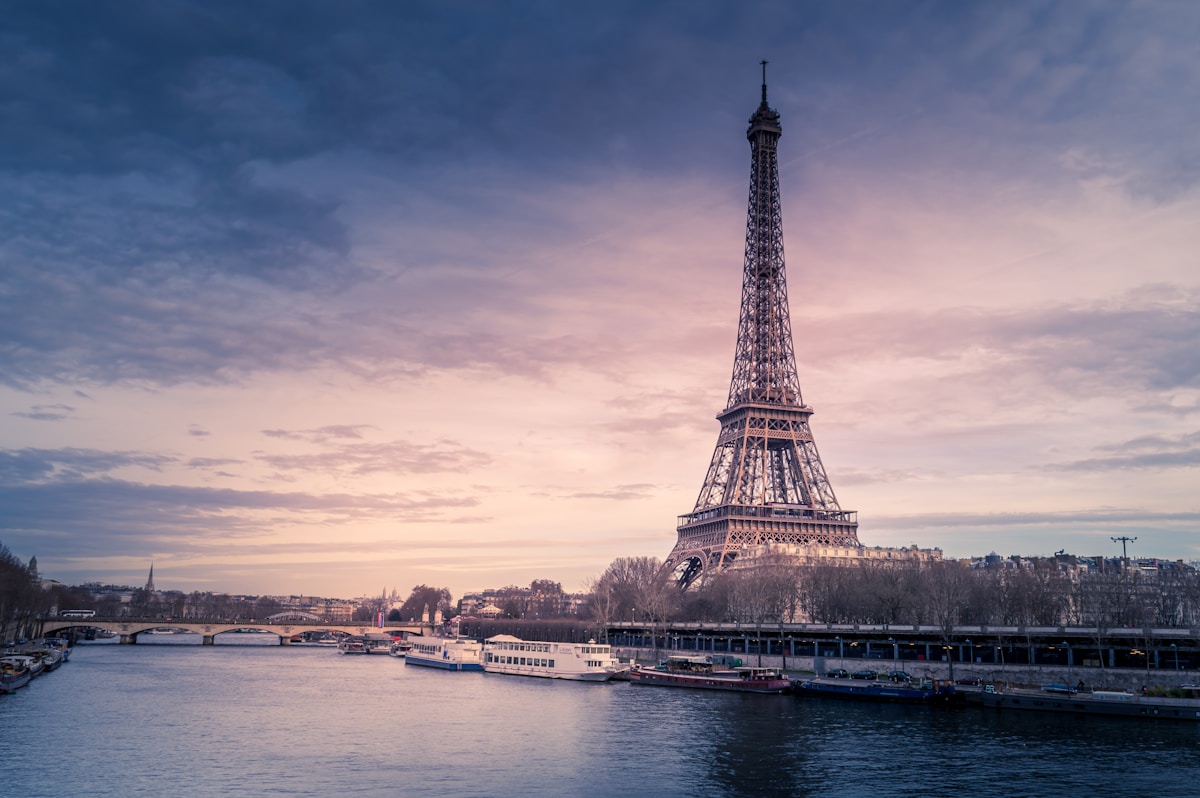
Do not go up the Eiffel Tower unless you have a booked summit ticket (€29). The lines are brutal, and the view from the top is less interesting than the view of the tower itself.
Better approach: Picnic on the Champ de Mars with baguette, cheese, and wine from a nearby Franprix (€8–€12 total). Walk across the Pont de Bir-Hakeim for the classic cinematic view (Inception fans will recognize it), then watch the sparkle show from Trocadéro. The tower sparkles for 5 minutes every hour after sunset — it's gratuitous and wonderful.
**Dinner:** If you want one proper splurge meal, this is the night. Le Relais de l'Entrecôte (€28 fixed price, steak frites, no reservations, expect a line) or Bistrot Paul Bert in the 11th (€35–€50, reservations essential, classic Paris bistro perfection).
If You Have an Extra Day: Three Worthwhile Additions

**Père Lachaise Cemetery** (metro Père Lachaise, lines 2 and 3)
Oscar Wilde, Jim Morrison, Édith Piaf, Molière, Chopin, and hundreds more. It's a sculpture garden, a history lesson, and a surprisingly peaceful walk. Free. Pick up a map at the entrance (€2) or download one — the cemetery is a maze.
**Musée de l'Orangerie** (€12.50, metro Concorde, line 1)
Monet's Water Lilies displayed in two oval rooms designed specifically for them. It's 45 minutes of pure serenity. Combine with a walk through the Tuileries.
**La Défense & the Grande Arche** (metro La Défense, line 1)
Paris's modern business district is a stark contrast to the historic center. The Grande Arche lines up perfectly with the Arc de Triomphe and the Louvre pyramid — a straight axis through centuries of architecture. The view from the rooftop (€15) is underrated.
Where to Eat: A Categorized Shortlist

**Budget (under €15):**
- L'As du Fallafel (Marais) — the famous falafel, €8–€12
- Breizh Café (Marais) — savory buckwheat galettes, €12–€16
- Marché des Enfants Rouges (Marais) — food market with stalls, €8–€14
- Any boulangerie lunch combo (sandwich + drink + pastry), €7–€10
**Mid-range (€20–€35):**
- Buvette (Pigalle) — French-American bistro, excellent brunch and dinner
- Le Comptoir du Panthéon (Latin Quarter) — traditional bistro, good value
- Les Cocottes (Invalides) — Christian Constant's casual spot, famous for casseroles
- Chez Prune (Canal Saint-Martin) — canal-side, always lively
- Le Galopin (Canal Saint-Martin) — natural wine, seasonal plates
**Splurge (€40+):**
- Bistrot Paul Bert (11th) — the classic Paris bistro experience, reservations essential
- Le Voltaire (7th) — riverside, old-school glamour, exceptional steak
- Le Comptoir du Relais (6th) — Yves Camdeborde's Saint-Germain institution, no reservations for dinner, arrive before 7 PM
**Breakfast:** Skip the hotel breakfast. Do as Parisians do — grab a croissant (€1.20–€1.50) and a café crème (€2.50–€3.50) at any corner boulangerie. Stand at the counter for the cheapest price.
Essential Practical Tips

**Museums:** The first Sunday of every month, most national museums are free. The Louvre and Orsay are closed on Tuesdays. Most museums are free for under-18s and EU residents under 26 — bring ID.
**Metro:** Runs 5:30 AM–12:30 AM (2 AM Fridays and Saturdays). Doors don't open automatically — press the button or pull the handle. Keep your ticket until you exit; inspectors check.
**Tipping:** Service is included in French restaurants (look for 'service compris'). Round up or leave 5% for exceptional service. At cafés, round to the nearest euro.
**Language:** A simple 'Bonjour' before asking a question changes everything. In shops, cafés, and restaurants, always greet first. It's not optional — it's the minimum social contract.
**Safety:** Paris is generally safe, but pickpockets operate on the Metro, at major tourist sites, and in crowded markets. Cross-body bags worn in front. Don't put phones in back pockets.
**Bathroom strategy:** Free public toilets are marked 'Sanisette' and are surprisingly clean. Museums, department stores (Galeries Lafayette, Printemps), and cafés are your other options. Buy a coffee if you use a café bathroom — it's polite.
**Walking shoes:** This itinerary involves 15–20 km of walking per day. Cobblestones are unforgiving. Your feet will determine the quality of your trip more than any restaurant reservation.
Conclusion: Paris Is a Slow Burn

Three days is enough to fall in love with Paris, but not enough to understand it. This itinerary gives you the icons, the neighborhoods, and the moments that make the city unforgettable — without the exhaustion that comes from trying to do too much.
The best Paris trips leave you with one or two places you wish you'd had more time for. That's not a failure — that's the city working as intended. It means you'll be back.
**Ready to walk Paris?** Share this itinerary with your travel partner, book your Sainte-Chapelle slot, and pack your most comfortable shoes. Paris is waiting. Bon voyage!